


- What is functionalism in sociology ?
- The Impact of Social Agents in Structures
- Society as a social system : role and status
- The differences between Parsons and Friedson : the doctor-patient relationship
During the first quarter of the 20th century, American sociology developed around empirical studies linked, in particular, to the Chicago School. Authors belonging to this School took an interest in the development of the newly-created city of Chicago, studying all its social mechanisms and laying the foundations for urban sociology, the sociology of deviance/delinquency, immigration… But all these surveys had no real theoretical backbone. In parallel, in Oceania, the work of B. Malinowski, an anthropologist who carried out an immersion survey in New Guinea, sought to break with an evolutionary vision of history held at the end of the 19th century by authors such as Herbert Spencer (1820-1903). We’ll come back to Malinowski’s contributions in another publication, but he laid the foundations for an absolute functionalism that must be kept in mind to understand what follows.
What is functionalism in sociology ?
To put it briefly, functionalism views society as a human body, with its various institutions as its organs. Society’s equilibrium depends on the integration and adaptation of its various constituent elements, and individual behavior is structured by means of roles (we play a part in our daily lives) and statuses (we occupy a given position in our work, for example). The analogy with the human body is no accident, and we owe it to Talcott Parsons.
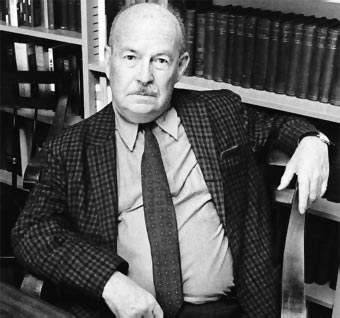
Talcott Parsons (1902-1979), a professor at Harvard University, set out to give sociology this theoretical column. In the 1930s, he translated Max Weber’s Protestant Ethics and the Spirit of Capitalism, a classic of the discipline, and in 1937, he wrote a massive book: The Structure of Social Action, which sought to reconcile the work of economist Alfred Marshall and sociologists Vilfredo Pareto, Emile Durkheim and Max Weber. For Parsons, sociology is a science of action (Lallement, 2018). In his 1937 book, he shows that: “Action is thought of as the product of an actor endowed with resources, who makes finalized choices and uses material and symbolic means to do so” (Lallement, 2018). Action, here, is the product of shared global values that are part of a network of norms constituting the social structure that constrains individual action. Within this framework, we act in accordance with our role and status (as a father, for example, I’m going to act like one and not abandon my children at the risk of being ostracized from society).
The Impact of Social Agents in Structures
In The Structure of Social Action, Parsons explains that social action is made up of a set of unit acts. Each action must involve four elements :
1) It presupposes an agent
2) It must have an end (i.e. it must be oriented towards a future state of affairs that guides its unfolding process).
3) It must take place in a setting that differs, in whole or in part, from the state of affairs toward which the act is directed (the actor has no control over his objective and/or he controls his objective).
4) All these elements are interconnected: either we have complete control over our action, and there is no chance; or we have to resort to alternative means; or actions are subject to independent factors.
We also have the possibility of making mistakes in pursuit of an end, but all this must put our choices into perspective, insofar as the “outside world” plays a role in determining action. Individual action is itself caught up in a given network.
The study of social action is therefore a study of systems in which individuals are integrated and linked together by shared values. Parsons illustrates this with the example of the American family.
The model of modern society responds to the demands of industrialization, which explains its :
- Its openness (homogamous marriage has been replaced by affective individual union)
- Multilinearity (both branches of the family carry equal weight).
- Conjugality: the family nucleus consists of the spouses and their children.
This structure is adapted to Parsons’ contemporary professional system, thanks to the independence of professional activities and the social position in relation to the family. Parsons nevertheless highlights the pathologies of the nuclear family: women are relegated to the status of wives, the elderly are marginalized by a value system that pushes performance and favors the young.
Society as a social system : role and status
The Structure of Social Action, published in 1937, laid the foundations for Talcott Parsons’ sociology. In his subsequent works, he proposed an abstract conception of society that went further than his theory of social action.
Parsons defended a system based on the triptych “personality, culture and society”.
Personality is understood through the notion of role, central to functionalist theory and later taken up by interactionist sociologists. Role refers to a system of reciprocal expectations and anticipations: we play the role of parent, patient, doctor, etc., and a specific role is expected of us. Culture refers to a set of values and symbols shared by actors, and society refers to interactions between actors.
In The Social System, Parsons shows that there are five dichotomies that impose themselves on actors in their actions, so that social action oscillates between :
Specificity and diffusion: we will pay specific attention to the personality or actions of others, or we will apprehend them as a whole.
- Affectivity and affective neutrality (we let our emotions guide us or we control them)
- Community-oriented and self-oriented: we act according to the common goals of others, or according to our own personal goals.
- Universalism and particularism: we judge our environment according to universal or personal criteria.
- Quality and achievement: we evaluate others on the basis of our own individual qualities (what they are), or on the basis of their past achievements
The differences between Parsons and Friedson : the doctor-patient relationship
This theoretical model was tested empirically by Parsons, who studied the relationship between doctor and patient: for Parsons, the patient is a deviant who upsets the balance of the social system. He is therefore responsible for his own health, and must use the various tools at his disposal to get better. This is where the doctor comes in: he plays the role of accomplisher, assessing the patient on the basis of what has led to his illness, and validating his skills with a diploma. He also plays on the sphere of universalism: his work must not focus on the patient’s personal situation, but on his illness. In addition, his work is community-oriented: he must solve a health problem that does not concern his own personal interests. The patient, for his part, must comply with the doctor’s prescriptions and play the role of “good patient”, since he legitimizes his deviant state.
Talcott Parsons’ work on the doctor-patient relationship provides both an original approach to how sociology can take an interest in medical practice, and an example of how a general theory can be demonstrated empirically. But the idea of the patient’s role in preventing deviation has been the subject of much criticism. The most famous is that of Eliot Freidson, an interactionist sociologist, who wrote a book entitled The Medical Profession in 1970. In interactionist sociology, as opposed to functionalist sociology, the aim is to see the social world as it is, based on everyday interactions.
For Freidson, medicine is characterized by a professional approach to illness, which the sociologist cannot influence. He therefore proposes to approach medical practice from a different angle: he still sees illness as a deviance, but he proposes to reflect on the meaning of the state of illness and not on the illness itself. In contrast to Parsons’ view of deviance as a challenge to the social order, the interactionist approach to deviance is more concerned with how acts are conceived by others. If I act in such-and-such a way, and it’s not viewed correctly by my peers, I can be considered deviant. From this perspective, the patient is no longer a deviant in Parsons’ sense of the word.
Parsons considered that medicine has the power to legitimize the behavior of those who behave as “good patients” (following the doctor’s prescriptions to the letter). Freidson proposes a more in-depth approach, showing that medicine creates the possibility of behaving like a sick person. Medicine is then seen as a moral enterprise, i.e. a body that imposes norms and values. The aim is not to punish deviance, but to repair it. Freidson explains, for example, that “when the physician affirms that alcoholism is a disease, he is as much a moral ‘entrepreneur’ as the man imbued with religious ideas who affirms that it is a sin” (quoted by Carricaburu and Ménoret, 2011, p. 54).
In his approach to the doctor-patient relationship, Freidson gives the patient a role that Parsons did not: the patient is an actor in the relationship with the doctor, and can also use his or her resources to guide the doctor in diagnosis or management. This is especially true when the patient is cared for individually; in the case of hospitalization, the patient is less free, and the doctor controls most of the interaction. Freidson thus proposes an original approach to the doctor/patient relationship, giving the layman a role he didn’t have in Parsons’ conception. Freidson’s work is still valid today, given the number of patients’ associations: how much confidence can we have in medical authority? How can we limit the autonomy of expert practice when the patient may also have something to say?


 lesitedushifa.com
Laisser un commentaire